


Asset liquidation is a common practice among businesses when assets are no longer needed, have become technologically obsolete or damaged or need to be disposed of as part of business restructuring. However, if the liquidation price is determined inappropriately or the proper process is not followed, businesses may face tax, accounting, audit and dispute-related risks. The article below provides a clear overview of asset liquidation regulations, how liquidation prices are determined and important considerations to ensure that the asset disposal process is transparent and effective.

What is asset liquidation?
Asset liquidation is the disposal of assets that are no longer needed or no longer generate economic benefits through methods such as sale, transfer, auction or destruction in accordance with applicable laws and the owners decision.
For businesses, asset liquidation is commonly carried out when:
-
Fixed assets have reached or are approaching the end of their useful life.
-
Machinery and equipment have become obsolete and are no longer compatible with new technologies.
-
Factories, vehicles or other assets have been damaged.
-
The business undergoes restructuring, a merger or dissolution.
-
Collateral is disposed of to recover debt.
It should be noted that asset liquidation does not mean selling assets at any price. The liquidation price should reflect the actual value of the asset at the time of the transaction in accordance with its condition and prevailing market conditions.
Distinguishing between the following concepts:
-
Residual value: The accounting value after depreciation
-
Market value: The transaction value between independent parties
-
Liquidation price: The actual selling price of the asset at the time of liquidation
Confusing these three concepts is one of the reasons why many businesses determine inappropriate prices and face risks during the liquidation process.
Legal basis for asset liquidation
Asset liquidation is governed by different legal provisions depending on the type of asset and its owner.
For businesses, asset management and liquidation are subject to provisions of the Law on Enterprises, the Law on Accounting, tax regulations and other applicable implementing regulations.
For public assets, liquidation must comply with the Law on Management and Use of Public Property and its implementing regulations.
For collateral, asset disposal is also governed by the Civil Code and regulations on security for the performance of obligations.
Therefore, businesses need to correctly identify the type of asset in order to apply the appropriate regulations and avoid confusion between the liquidation of corporate assets and the liquidation of public assets.
When does a business need to liquidate assets?
During its operations, a business may need to carry out asset liquidation in various circumstances.
|
Circumstance |
Purpose |
|
Obsolete machinery and equipment |
Invest in new technology |
|
Damaged assets |
Recover the remaining value |
|
Vehicles no longer in use |
Reduce management costs |
|
Business restructuring |
Reorganize the asset portfolio |
|
Business dissolution |
Settle financial obligations |
|
Collateral disposal |
Recover debt |
Determining the appropriate time for liquidation helps businesses optimize capital resources, reduce maintenance costs and improve asset utilization efficiency.
Asset liquidation process
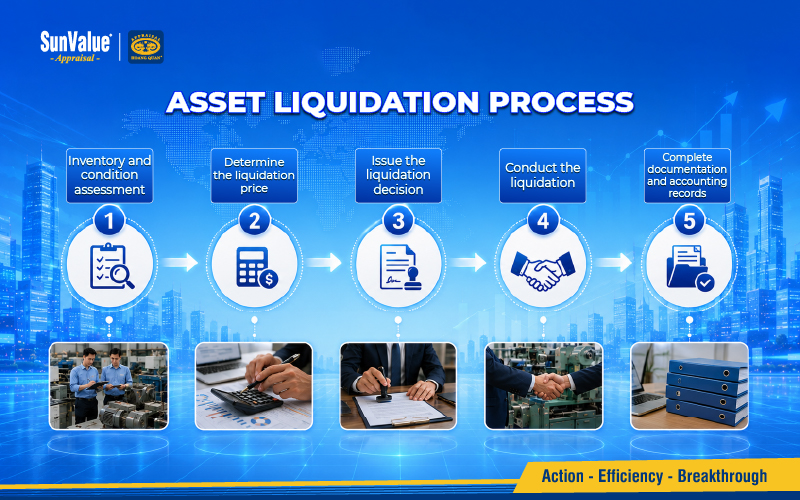
Although each business may establish its own procedures, the asset liquidation process generally includes the following steps:
-
Step 1 - Inventory and condition assessment: The business inspects the current condition of the asset and assesses its level of wear and tear, remaining usability and economic efficiency.
-
Step 2 - Determine the liquidation price: The liquidation price should be determined based on market prices, the actual condition of the asset and other relevant factors rather than solely on its residual value in the accounting records.
-
Step 3 - Issue the liquidation decision: The authorized person issues an asset liquidation decision or proceeds in accordance with the businesss asset management regulations.
-
Step 4 - Conduct the liquidation: Depending on the value and nature of the asset, it may be sold directly, offered through competitive bidding or auctioned.
-
Step 5 - Complete documentation and accounting records: Once the transaction is completed, the business prepares the liquidation minutes, issues an invoice if required, derecognizes the asset and completes the relevant accounting entries.
How is the asset liquidation price determined?
This is one of the issues that businesses are most concerned about.
In practice, the liquidation price is neither the original purchase price nor the residual value recorded in the accounting books.
The liquidation price is generally determined based on the following factors:
-
Transaction prices of comparable assets in the market.
-
Technical condition and degree of wear and tear.
-
Age and remaining utilization potential.
-
Market supply and demand.
-
Dismantling, transportation or repair costs.
-
Legal documentation of the asset.
Is an appraisal required before asset liquidation?
Current laws do not require businesses to engage an appraisal company in every case of asset liquidation.
However, an appraisal is recommended in the following circumstances:
-
High-value assets.
-
Liquidation of real estate, factories or production lines.
-
Collateral disposal.
-
Business dissolution or restructuring.
-
Transactions with related parties.
-
Audit or tax finalization purposes.
-
Asset auctions.
An appraisal report helps determine an objective market value, providing a basis for businesses to establish an appropriate liquidation price and reduce the risk of disputes.
What documents are required for asset liquidation?
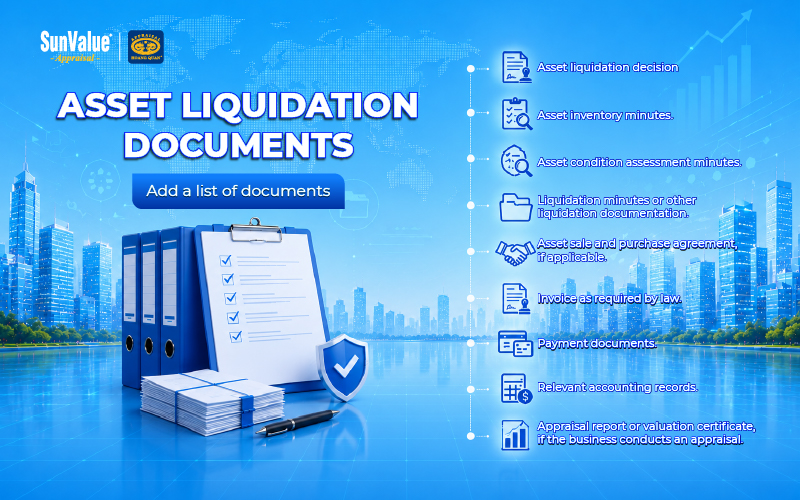
A typical asset liquidation file includes:
-
Asset liquidation decision.
-
Asset inventory minutes.
-
Asset condition assessment minutes.
-
Liquidation minutes or other liquidation documentation.
-
Asset sale and purchase agreement, if applicable.
-
Invoice as required by law.
-
Payment documents.
-
Relevant accounting records.
-
Appraisal report or valuation certificate, if the business conducts an appraisal.
Maintaining complete documentation makes it easier for businesses to handle audits, tax finalization or explanations requested by regulatory authorities.
Is an invoice required for asset liquidation?
In most cases, when a business sells an asset for which an invoice must be issued under applicable laws on invoices and supporting documents, the business must issue an invoice, declare the revenue and fulfill the relevant tax obligations in accordance with current regulations.
In addition, businesses need to accurately determine their value-added tax obligations, corporate income tax obligations and deductible expenses arising from asset liquidation to ensure legal compliance.
Common mistakes in asset liquidation
Many businesses encounter difficulties during the liquidation process because of the following mistakes:
-
Using only the residual book value to determine the selling price.
-
Failing to conduct market price research.
-
Failing to assess the actual condition of the asset.
-
Incomplete liquidation files or supporting documents.
-
Selling assets to related parties without a proper basis for determining the price.
-
Failing to consider applicable tax obligations.
-
Failing to obtain an appraisal for high-value assets.
Preparing complete documentation and objectively determining the liquidation price can help businesses minimize risks and improve transparency in asset management.
Asset appraisal services before liquidation at Hoang Quan Appraisal
For high-value asset liquidation transactions, accurately determining market value not only helps businesses establish an appropriate selling price but also contributes to preventing asset value losses and minimizing potential legal risks.
In many circumstances such as the liquidation of real estate, machinery and equipment, collateral disposal, auctions, business dissolution or restructuring, an appraisal report provides an important basis for:
-
Determining a liquidation price consistent with market value.
-
Reducing the risk of selling assets below their actual value.
-
Enhancing transparency when working with banks, auditors, tax authorities and other relevant parties.
-
Providing businesses with a sound basis for explanations when necessary.
Hoang Quan Appraisal provides appraisal services for a wide range of assets, including:
-
Real estate.
-
Machinery and equipment.
-
Vehicles.
-
Factories.
-
Businesses.
-
Investment projects.
-
Collateral and various other types of assets.
Appraisal reports and valuation certificates are prepared in accordance with applicable laws using valuation methods appropriate to each type of asset and intended purpose.
If your business is preparing for asset liquidation and needs to determine market value objectively before selling, auctioning or otherwise disposing of assets, Hoang Quan Appraisal is ready to provide support and establish a transparent basis for valuation, contributing to more effective transactions and reduced risks throughout the liquidation process.
Conclusion
Asset liquidation is not merely the sale or disposal of assets that are no longer needed but also involves various legal, accounting and tax requirements. Determining an appropriate liquidation price, preparing complete documentation and following the proper process can help businesses optimize asset value, minimize disputes and improve management efficiency. For high-value assets or complex transactions, an independent appraisal provides an important basis for businesses to make transparent decisions that are consistent with market conditions.


